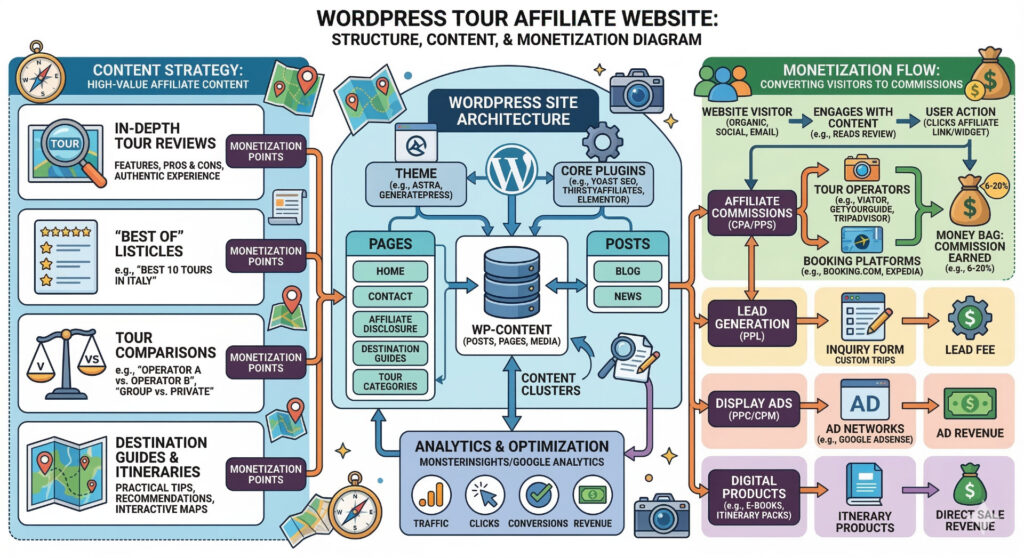
Travel affiliate marketing can still be a very real income model in 2026, but the easy era of dropping a few random affiliate links into generic blog posts is long gone. The publishers who make meaningful revenue now usually do three things better than everyone else: they pick the right travel niche, publish content around booking intent, and use a monetization setup that feels natural inside the user journey.
That is the key shift.
In 2026, making money with travel affiliate marketing is less about chasing traffic at any cost and more about building a useful content system that helps people decide what to book. When your content is genuinely helpful and your monetization path is seamless, commissions become much easier to earn. That people-first approach also aligns with how Google says its systems prioritize helpful, reliable content created for users rather than search-engine-first pages.
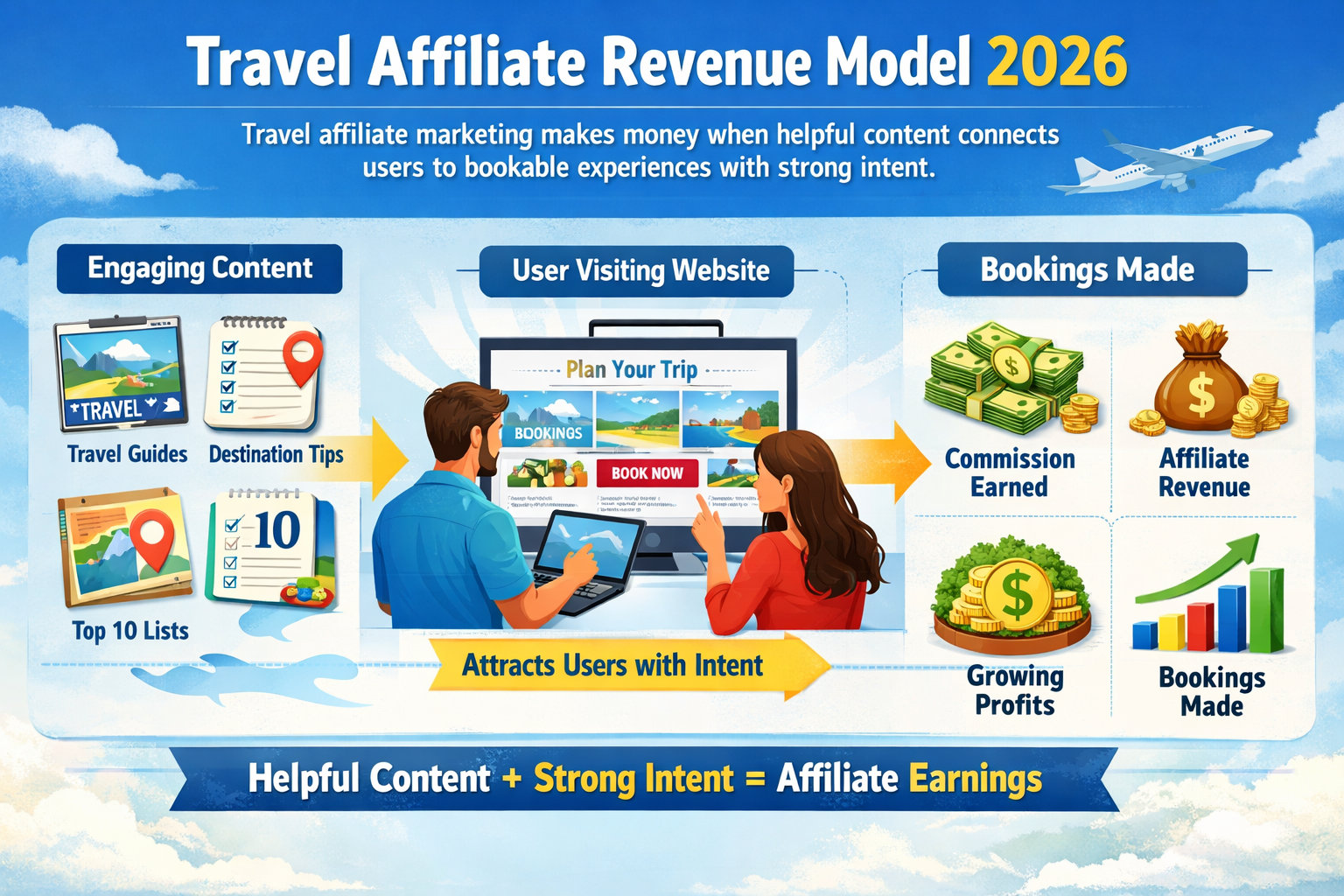
What travel affiliate marketing really means in 2026
Travel affiliate marketing is a model where you earn commission by sending readers to book travel products or experiences through tracked affiliate referrals.
In 2026, the strongest opportunities are usually not the broadest ones. They are the offers that fit naturally inside real travel decisions, especially in categories like:
- tours and activities
- attraction tickets
- day trips
- destination-based experiences
- itinerary support content linked to bookings
That is why travel experiences remain such a practical affiliate category. They fit directly into articles people already search for, such as “best tours in Rome,” “family-friendly activities in Singapore,” or “day trips from Barcelona.”
If you are just getting started, this article pairs naturally with How to Start a Travel Affiliate Blog That Generates Passive Income and The Best Way to Build a Tour Affiliate Website on WordPress.
Can you still make good money with travel affiliate marketing?
Yes, but not by treating it like a shortcut.
The blogs and niche travel sites that still make money tend to work like focused publishing businesses. They build topical authority, organize content around user intent, and make booking recommendations at the right moment instead of stuffing every page with links.
What changes in 2026 is not whether the model still works. What changes is the level of execution required.
You need:
- a niche with commercial intent
- content that helps users make decisions
- internal links that guide readers deeper into the site
- a monetization system that does not feel clumsy
- a technical setup that supports scale from the beginning
Step 1: Pick a niche where booking intent is already strong
The easiest way to struggle with travel affiliate marketing is to go too broad.
“Travel” is too wide. “Things to do for first-time visitors in major European cities” is much better. “Food and culture tours in Italy” is even stronger. A tight niche helps you create articles that rank around related themes and gives your site a clearer reason to exist.
Some niches are easier to monetize because the booking intent is already present. For example:
- best food tours in Rome
- top family-friendly tours in London
- worth-it desert safaris in Dubai
- skip-the-line attraction tickets in Paris
Those are not abstract searches. They are decision-stage searches. That is where affiliate content makes the most money.
Step 2: Use an affiliate foundation built for tours and experiences
If you want to make money with travel affiliate marketing in 2026, the affiliate model itself matters.
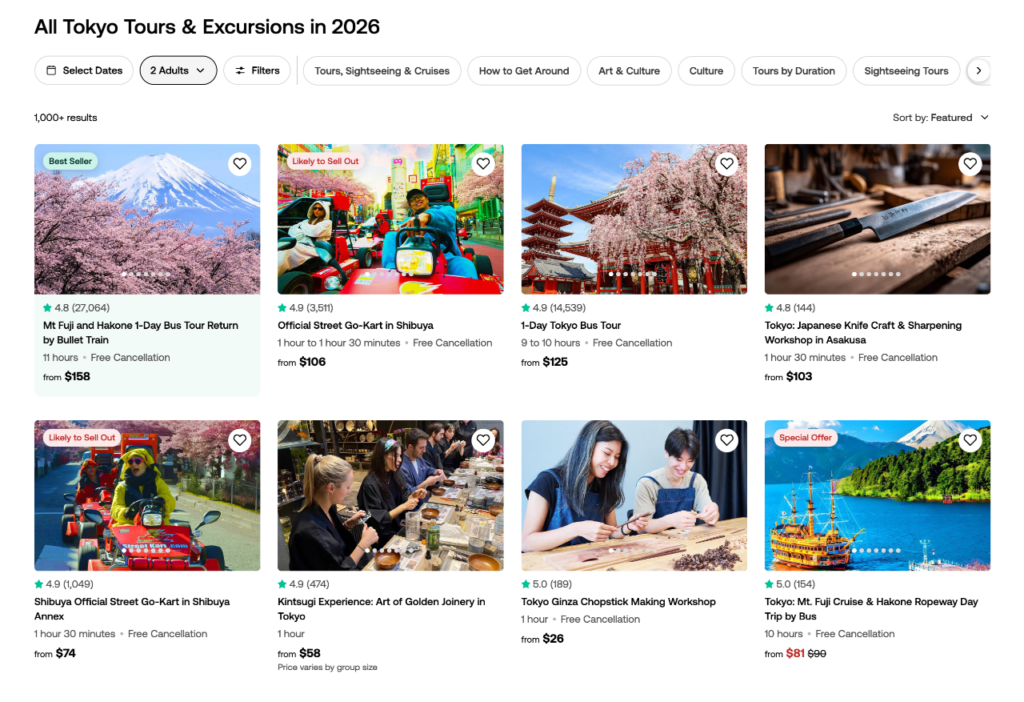
For a tours-and-experiences site, Viator’s Affiliate API is one of the strongest foundations to start with. Viator positions it for partners who want to merchandise travel experiences while earning commission on bookings. The affiliate page highlights a catalog of over 300,000 tours and activities across 2,500 destinations, structured product information such as descriptions, photos, reviews, and itineraries, plus free signup and immediate Basic Access for new affiliate accounts. Viator also states that when you refer traffic to viator.com, you earn standard commission on eligible bookings made within a 30-day cookie window.
That makes Viator especially practical for content publishers. You are not trying to force affiliate offers into the wrong format. You are building around a platform already designed for tours, activities, and destination-led discovery.
Step 3: Make implementation easy with WordPress from day one
A lot of affiliate sites lose momentum because the founder starts with a messy stack: manual links, inconsistent layouts, hard-coded blocks, and no repeatable way to display offers.
That is why the WordPress setup matters so much.
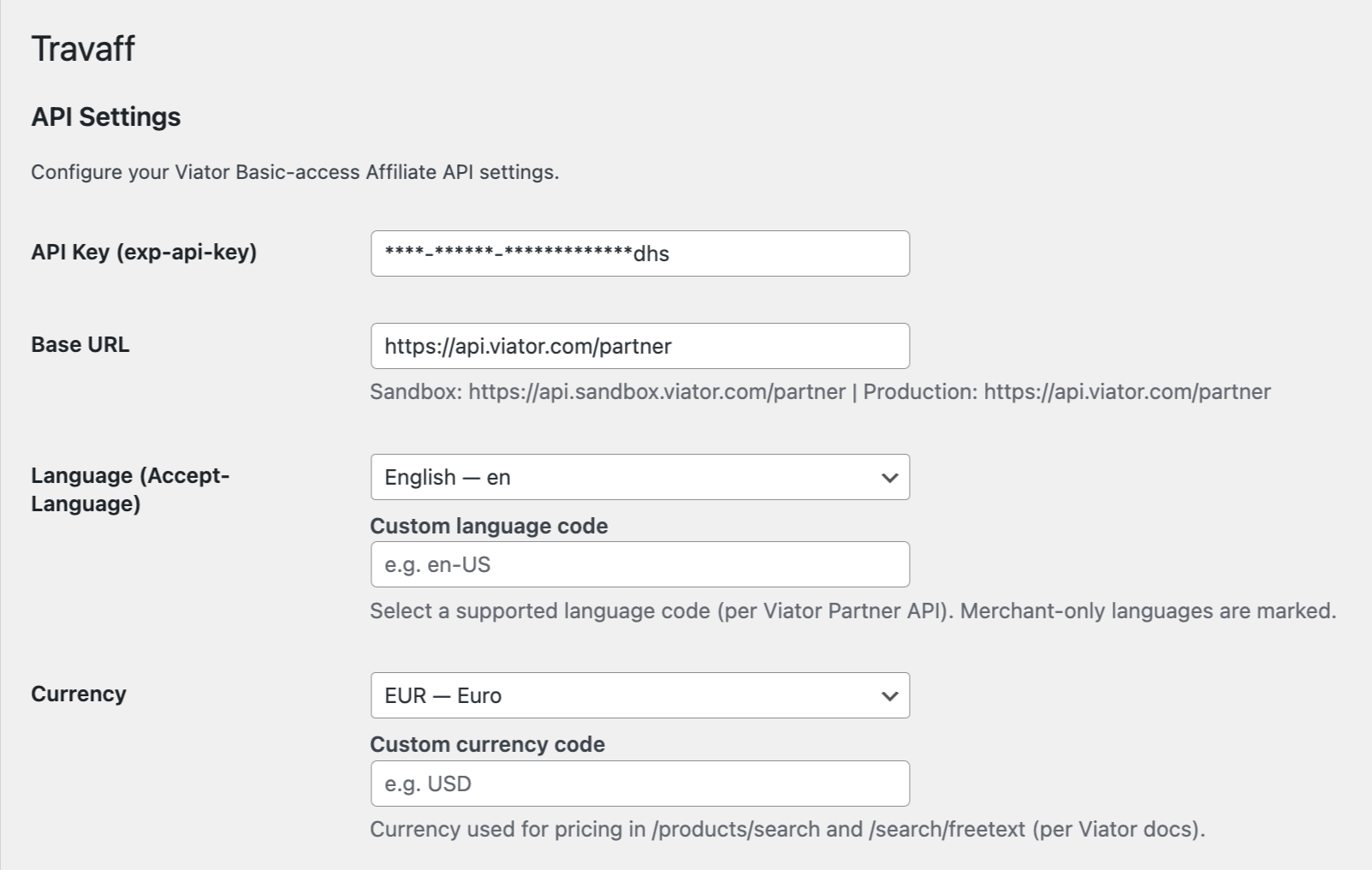
If you are building on WordPress, Travaff’s Viator Affiliate API WP Plugin makes the monetization layer much easier to operationalize from the start. Travaff presents the plugin as a WordPress solution that helps publishers launch quickly with no coding, connect their own affiliate credentials, auto-generate Viator affiliate deeplinks, and sync pricing, availability, and content in real time. The product page also frames it as a way to build a structured affiliate system from day one rather than piecing together a manual setup.
That matters because making money in travel affiliate marketing is not just about choosing the right offer. It is also about making the implementation easy enough that you can stay focused on content, publishing cadence, and user intent.
This connects naturally with How to Build a Travel Affiliate Website with WordPress Plugins, Travel Affiliate API vs Manual Affiliate Links: Which Is Better?, and The Ultimate Guide to Automated Travel Affiliate Websites.
Step 4: Create content that sits close to the booking decision
The money in travel affiliate marketing usually comes from content that helps users decide, not content that just attracts broad curiosity.
That includes topics like:
- best tours in [destination]
- is [activity] worth it
- best day trips from [city]
- family-friendly tours in [destination]
- which [experience type] is best for first-time visitors
- top-rated activities for short stays
These queries work because they sit close to commercial action. The reader is not just browsing. They are considering a booking.
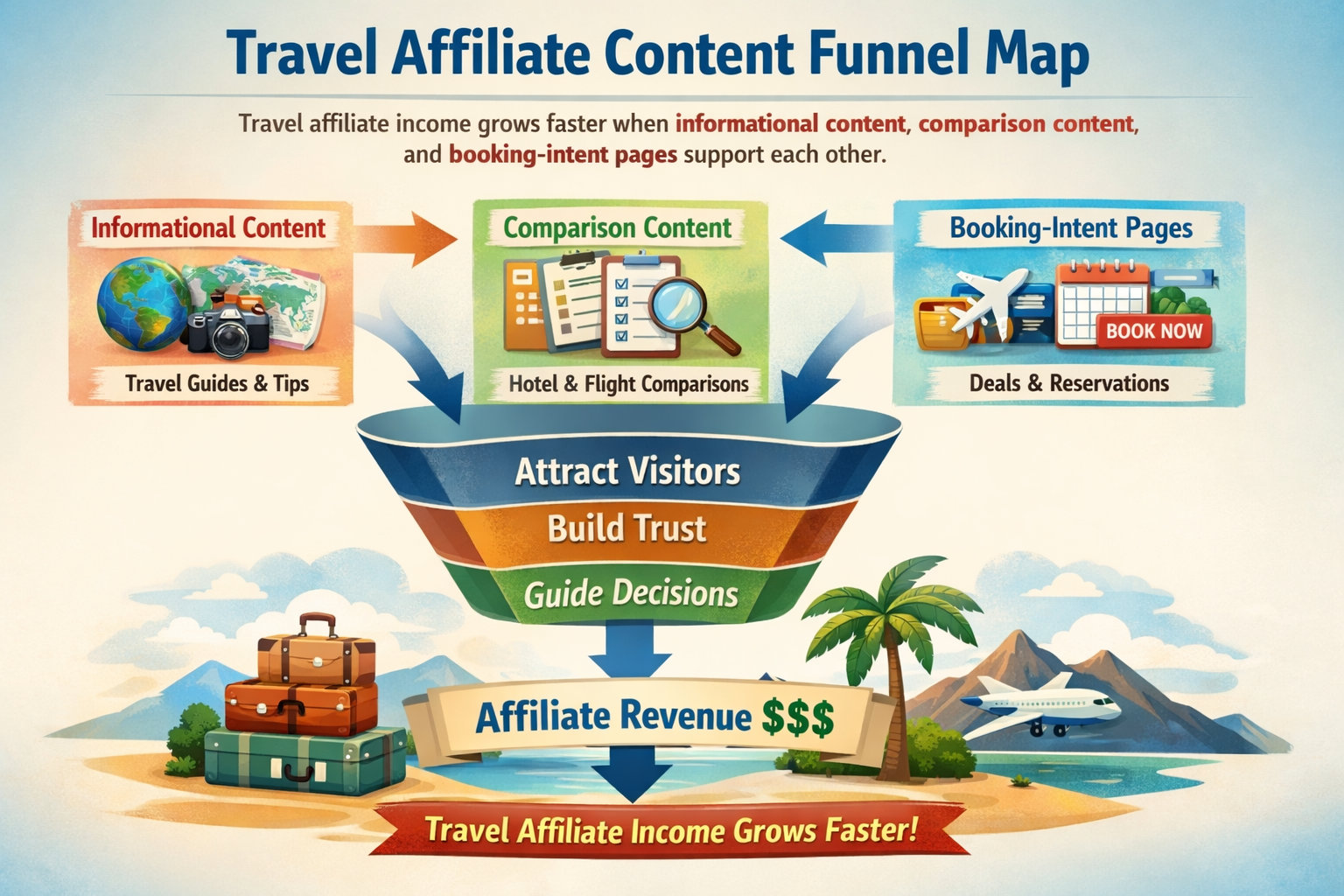
A smart content mix usually includes:
Top-of-funnel content
Broad guides that pull the right audience in.
Mid-funnel content
Comparisons, “best of” posts, and recommendation articles.
Bottom-of-funnel content
Pages that help the user choose and book a specific type of experience.
For monetization-focused follow-up reading, link this section to How to Increase Travel Affiliate Commission Without More Traffic and How to Optimize a Travel Affiliate Funnel for More Revenue.
Step 5: Write content that helps people choose, not just skim
The affiliate articles that make money usually have one big difference from weak content: they reduce uncertainty.
They do not just list options. They help readers decide.
A good travel affiliate article should answer questions like:
- Who is this best for?
- When is it worth booking?
- What trade-offs matter most?
- What do first-time travelers often get wrong?
- Which choice is better for families, couples, solo travelers, or budget-conscious users?
That kind of specificity makes content stronger for users and more commercially effective. It also aligns with Google’s people-first content guidance, which stresses originality, useful insight, clear expertise, and value beyond rewritten summaries.
Step 6: Put affiliate recommendations where they feel natural
One of the easiest ways to hurt conversion is to make your monetization feel bolted on.
The strongest affiliate placements usually appear where the user is already ready for the next step.
That might look like:
- a recommendation block after the main answer
- a short comparison table
- a “best for” breakdown
- a featured tour or experience section
- a context-aware CTA after explaining why someone should book
This is where Viator’s Affiliate API becomes especially useful because it is built around structured product content, reviews, itineraries, and experience data that fit naturally into editorial decision-making content. It is also where Travaff’s implementation helps operationally, since you are not manually rebuilding every recommendation block page by page.
If you want to deepen this angle later, add internal links to How to Maximize Revenue from Viator Affiliate Programs and Travaff.com Review: Is It a Smart Solution for Travel Affiliates?.
Step 7: Build an internal link system that supports revenue
A profitable travel affiliate site is not just a collection of posts. It is a content system.
A strong internal link structure helps readers and search engines move from broad informational pages toward decision-ready content and monetized pages.
For example:
- a destination guide links to a “best tours” post
- the “best tours” post links to a more specific comparison page
- the comparison page links to your strongest recommendation or product-focused page
This is one of the simplest ways to improve both SEO structure and monetization flow.
Step 8: Avoid the common reasons travel affiliate sites stall
These are the patterns that usually stop a site from making real money:
Going too broad
The site never develops authority around a monetizable topic.
Publishing traffic-first content only
You get visits, but not the right kind of intent.
Making monetization too manual
You spend more time managing links than improving content.
Using generic content that adds no judgment
The reader leaves without feeling confident enough to click or book.
Treating affiliate setup as an afterthought
The site is harder to scale because the monetization system was never built into the structure.
What a realistic earning path looks like in 2026
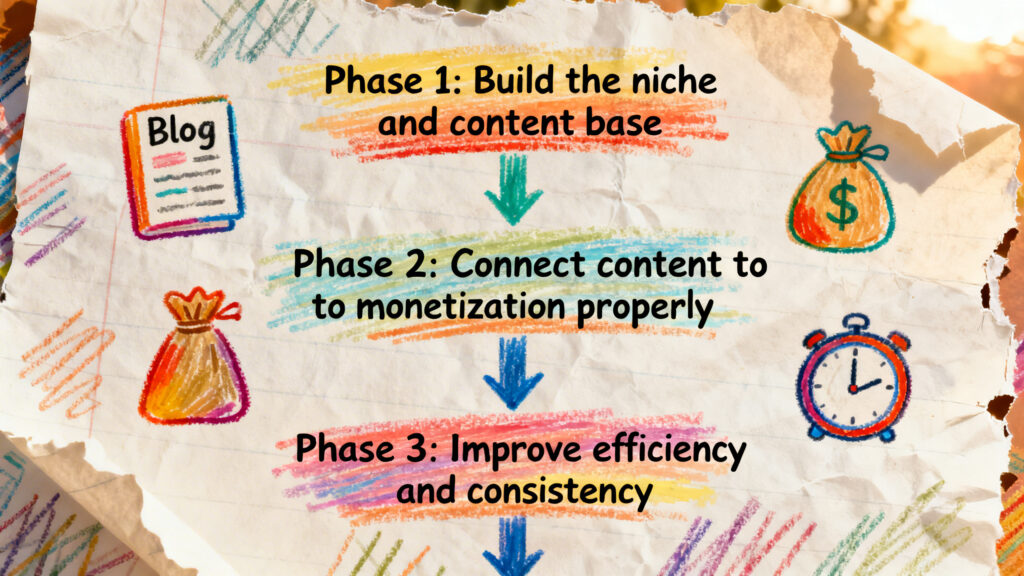
A realistic path often looks like this:
Phase 1: Build the niche and content base
Pick a narrow travel topic, launch the site, and publish your first strong cluster.
Phase 2: Connect content to monetization properly
Use booking-intent article structures, insert contextual recommendations, and clean up internal links.
Phase 3: Improve efficiency and consistency
Use better systems so you can publish more strategically and manage monetization with less manual overhead.
That is why a setup that combines Viator’s Affiliate API with Travaff’s Viator Affiliate API WP Plugin makes so much sense for WordPress-based travel affiliates in 2026. Viator provides the affiliate foundation, while Travaff simplifies how that foundation is deployed on the site.
Final thoughts
Making money with travel affiliate marketing in 2026 is still absolutely possible, but the winning model is clearer now than it used to be.
You need a focused niche.
You need content built around booking intent.
You need an affiliate setup that feels natural inside the site.
And you need a publishing system that helps you scale without turning the whole project into manual busywork.
For WordPress publishers in the tours-and-experiences space, that usually means building around Viator’s Affiliate API and using Travaff’s Viator Affiliate API WP Plugin to make implementation faster, cleaner, and easier from day one.