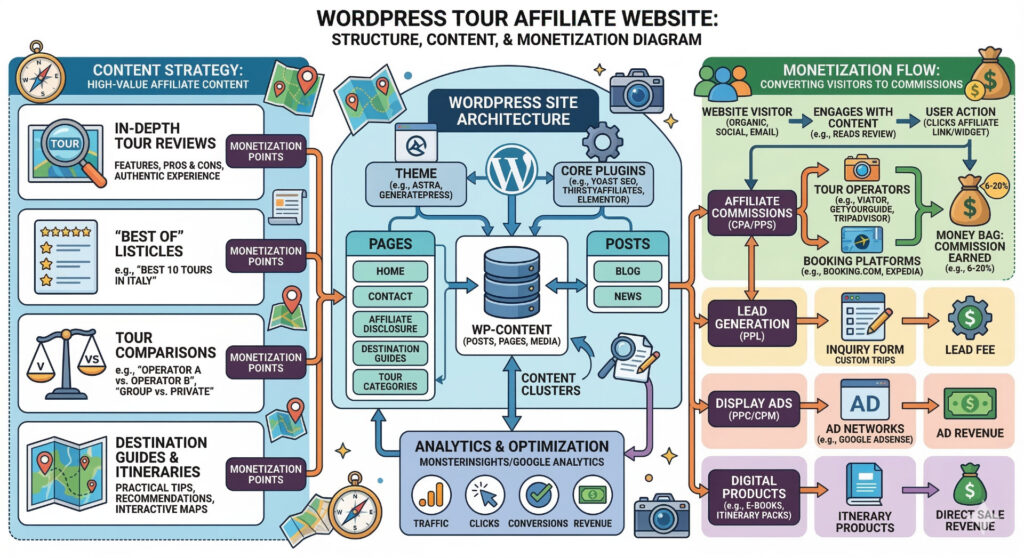
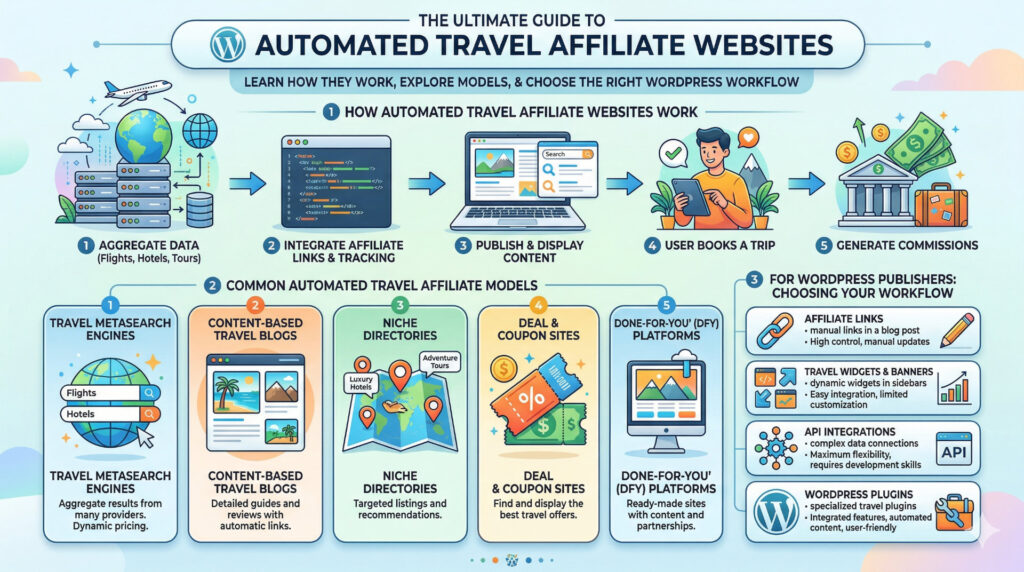
If you run a travel affiliate website, one of the most important decisions you will make is how you connect content to monetization. Do you rely on manual affiliate links placed by hand inside blog posts, or do you build around a structured Travel Affiliate API setup from the beginning?
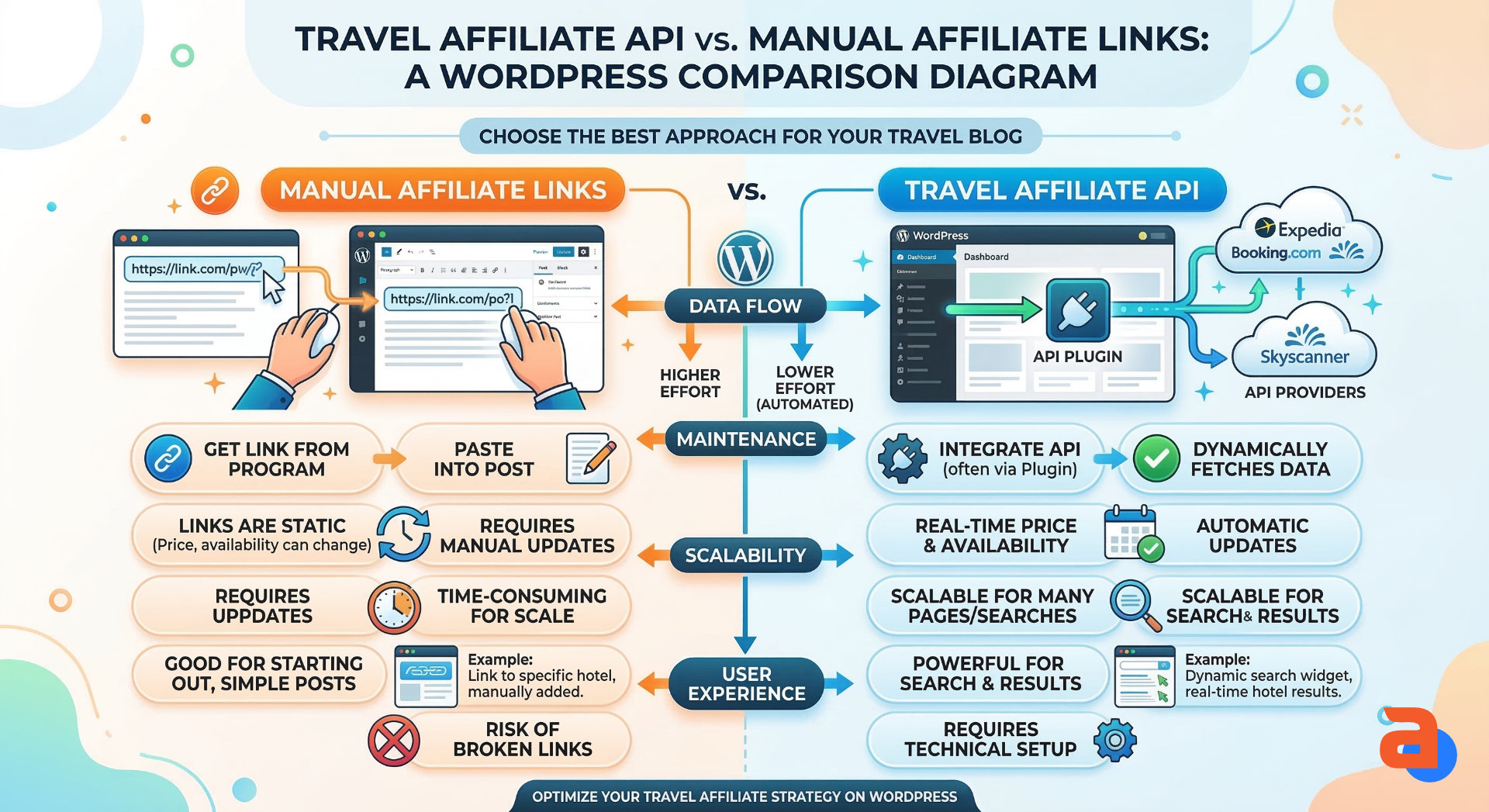
For many publishers, manual links feel easier at first. They look simple, familiar, and quick to add. But once the site starts growing, that “easy” workflow often becomes messy. Links are harder to manage, layouts become inconsistent, and monetization starts to feel disconnected from the user experience.
That is why this comparison matters.
For a serious WordPress travel affiliate site in 2026, the real question is usually not whether API is more powerful. It is whether you want to keep patching monetization together manually, or start with a cleaner system from day one.
What are manual affiliate links?
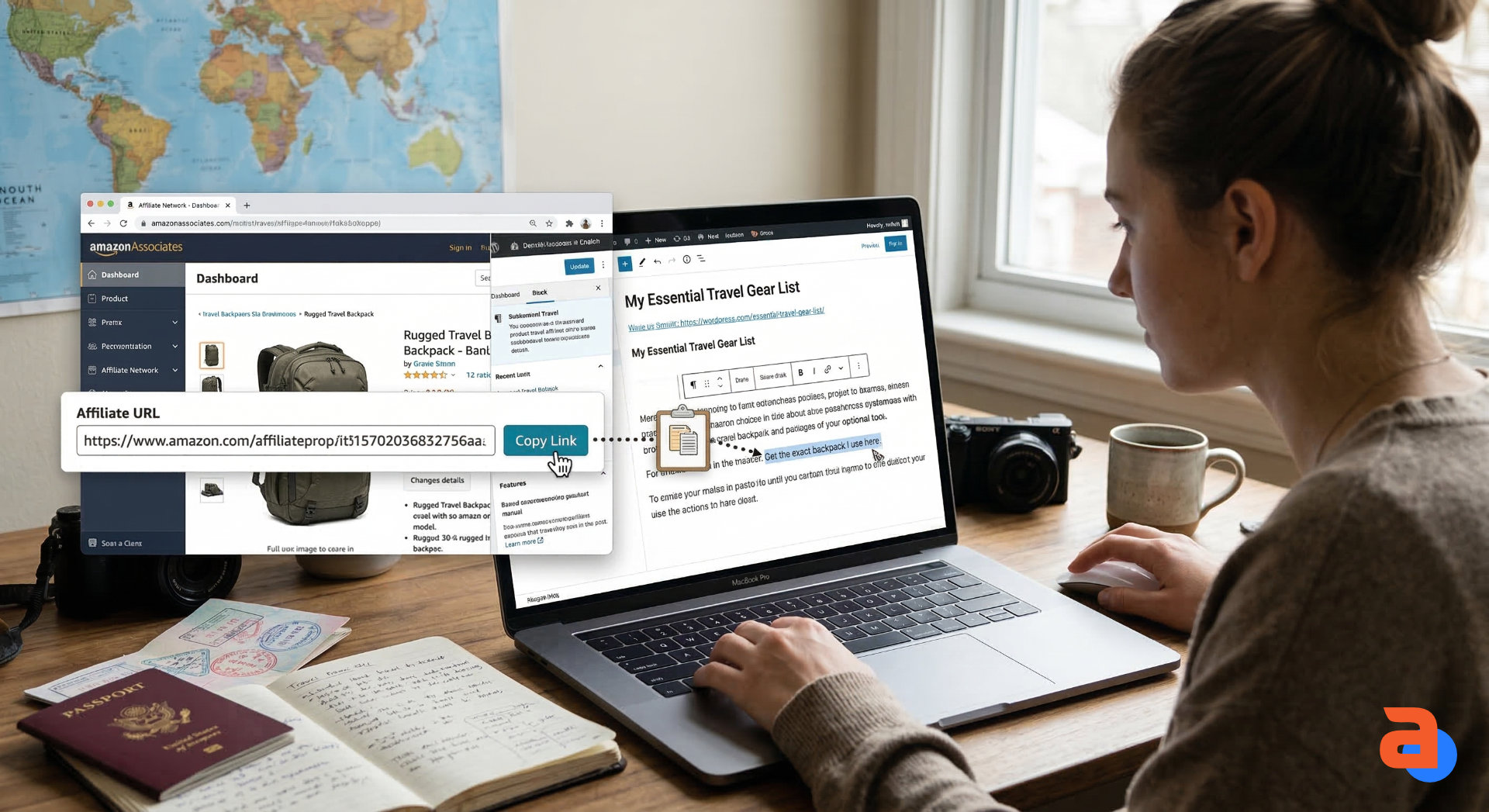
Manual affiliate links are the traditional affiliate method most bloggers start with.
The workflow is simple:
- choose an offer
- generate a referral link
- paste it into your content
- repeat that process for every page, call to action, or recommendation block
That can work when the site is small. If you only have a handful of articles, manual links feel manageable.
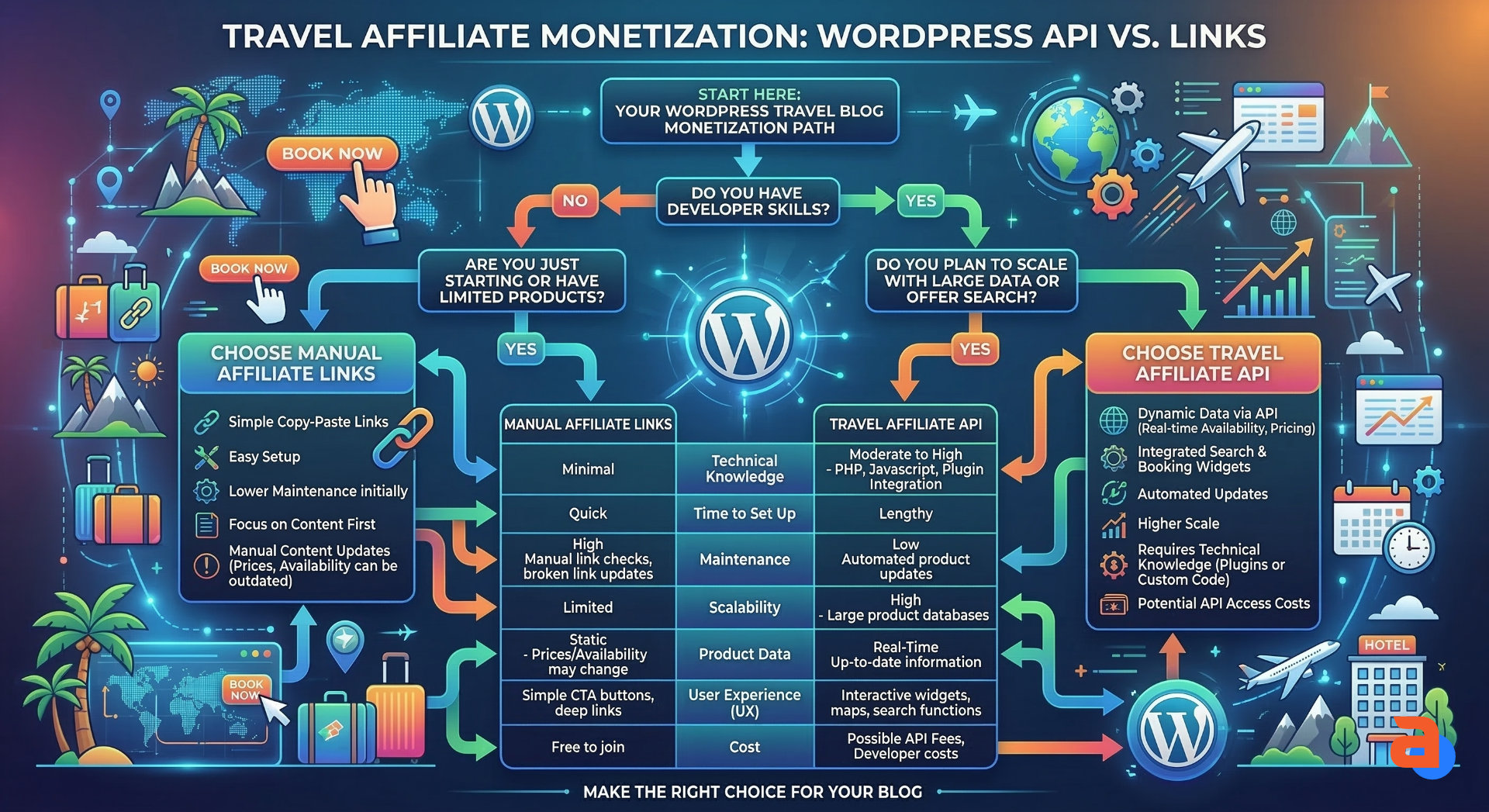
But the trade-off shows up quickly. The more pages you publish, the more repetitive the workflow becomes. You end up managing links page by page, editing CTAs manually, and trying to keep the monetization layer consistent across a growing content library.
If you are still building the broader foundation, this article pairs well with How to Start a Travel Affiliate Blog That Generates Passive Income and How to Make Money with Travel Affiliate Marketing in 2026.
What is a Travel Affiliate API?
A Travel Affiliate API gives publishers a more structured way to connect affiliate monetization with their website content.
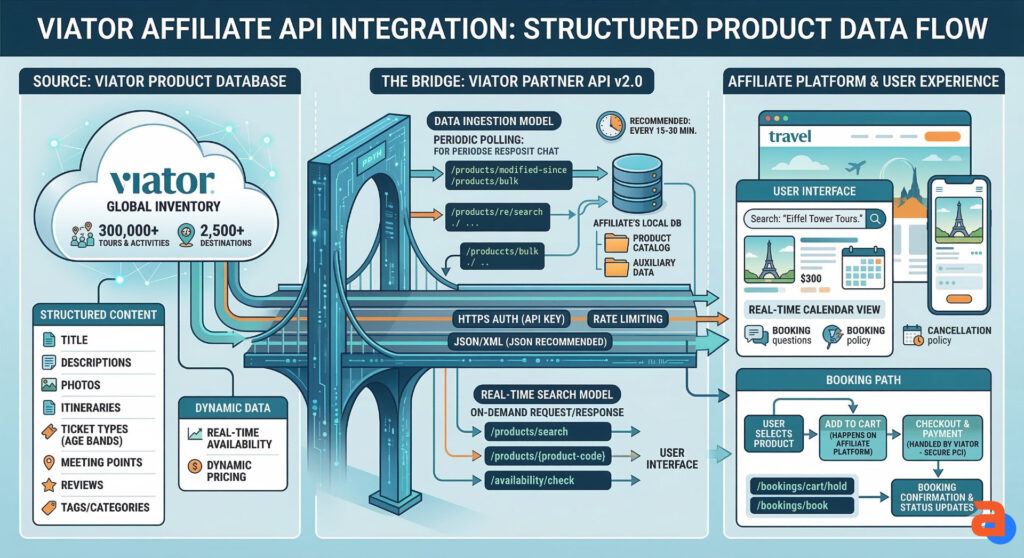
In the case of Viator’s Affiliate API, Viator says partners can merchandise travel experiences using structured product content such as descriptions, photos, reviews, itineraries, and availability data, while earning commission on bookings. Viator also says signup is free, new affiliate accounts receive Basic Access immediately, and partners referring traffic to viator.com can earn standard commission on eligible bookings made within a 30-day cookie window.
That matters because the API model is not just “another link method.” It changes the way affiliate content can be presented and managed.
Start with a better affiliate foundation than manual links
If your site is built around tours and experiences, Viator’s Affiliate API gives you a stronger foundation than scattered copy-paste links. It is built for partners who want to merchandise travel experiences while earning commission on bookings.
Why manual affiliate links still appeal to beginners
Manual links are attractive for one obvious reason: they feel fast.
You do not need to think about systems, templates, or structured implementation. You can just paste a link into a post and move on.
That is often why beginners choose them first.
They are useful when:
- you are validating a content niche with only a few posts
- you want to test whether users will click at all
- you are not yet thinking about a repeatable site structure
- you are comfortable managing everything page by page
So yes, manual links can work. But they work best as a minimal starting mechanism, not as the ideal long-term workflow for a serious WordPress travel affiliate site.
Where manual affiliate links start to break down
The main problem with manual links is not that they fail immediately. It is that they do not age well as your site grows.
Common friction points include:
- inconsistent CTA placement across articles
- repetitive copy-paste work
- harder tracking discipline
- more time spent editing links manually
- weaker product presentation
- a less structured user experience overall
This becomes even more noticeable if you publish a lot of destination pages, “best tours” articles, comparison content, or booking-intent landing pages.
At that stage, the monetization system often starts feeling like an afterthought.
Why Travel Affiliate API is usually the better long-term model
A Travel Affiliate API is usually the better model because it supports structure.
Instead of treating monetization as a scattered layer added manually inside each post, the API approach makes it easier to build a repeatable system around:
- product presentation
- affiliate tracking flow
- recommendation layouts
- consistent call-to-action logic
- richer destination and experience content blocks
With Viator’s Affiliate API, Viator explicitly says partners can choose which products to include and filter by product type, category, destination, review rating, and more. Viator also says it provides structured product information, including descriptions, photos, traveler reviews, and itineraries. That is exactly the kind of data model that makes affiliate merchandising feel more natural inside editorial content.
For publishers who want stronger monetization design, that is a major advantage.
This section connects naturally to How to Increase Travel Affiliate Commission Without More Traffic, How to Optimize a Travel Affiliate Funnel for More Revenue, and How to Maximize Revenue from Viator Affiliate Programs.
Why Travaff makes the API path easier on WordPress
This is the part that matters most for actual implementation.
A lot of publishers understand that API-based monetization is stronger, but they hesitate because they assume it will be too technical or time-consuming to set up.
That is exactly where Travaff’s Viator Affiliate API WP Plugin changes the equation.
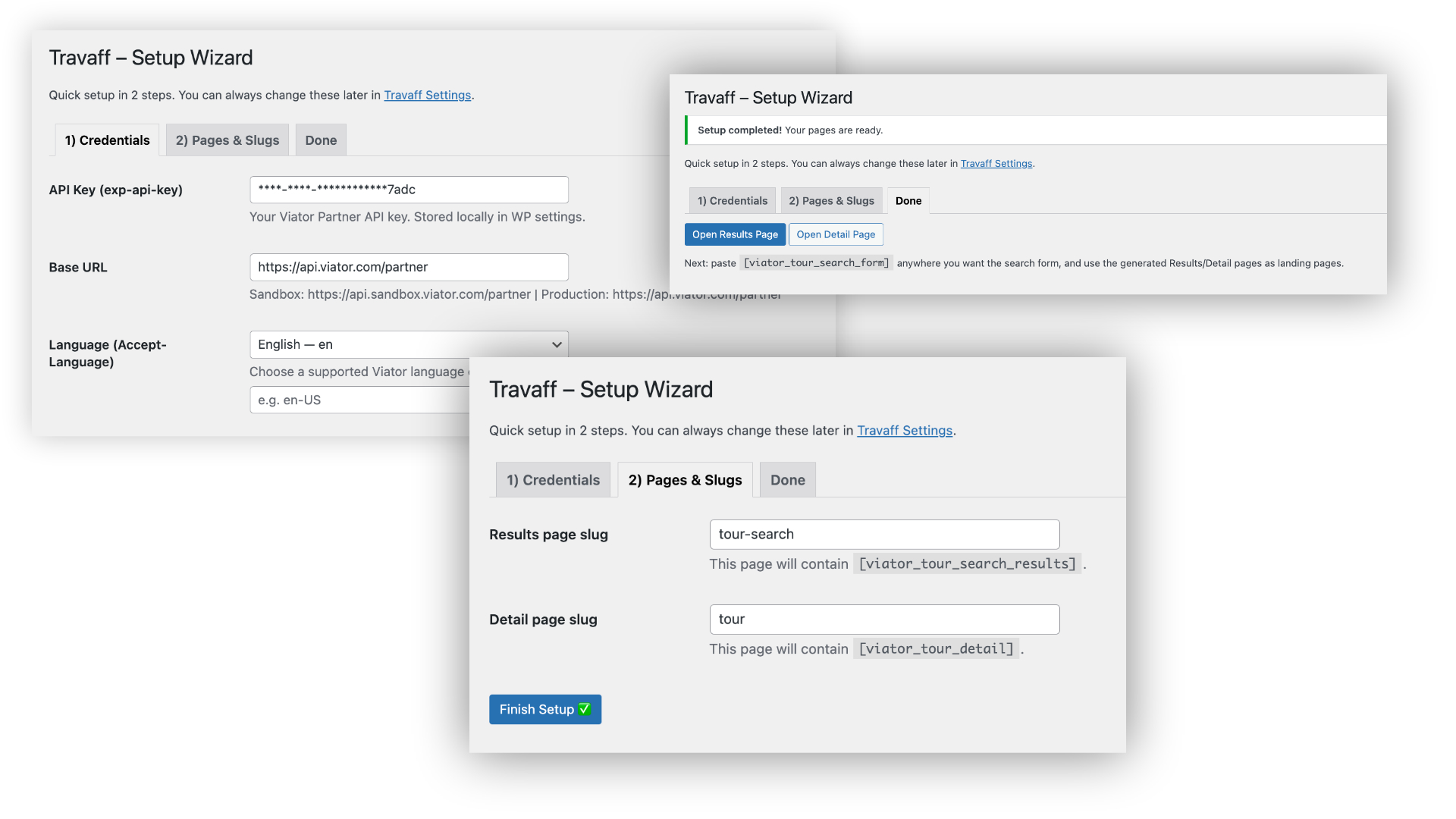
According to Travaff’s product page, the plugin is built for WordPress users who want a quicker launch, using their own affiliate credentials while the plugin handles display and connection logic. Travaff says it auto-generates Viator affiliate deeplinks, supports blocks and shortcodes, syncs pricing, availability, and content in real time, and follows a simple Install → Connect → Display workflow with zero coding required.
That makes the API route much more practical from day one.
Want the easiest WordPress implementation from day one?
This also links naturally with How to Build a Travel Affiliate Website with WordPress Plugins, The Best Way to Build a Tour Affiliate Website on WordPress, and Best Travel Affiliate Tools for Publishers in 2026.
So which is better: API or manual links?
If the goal is speed for a tiny experiment, manual links are simpler.
If the goal is building a serious WordPress travel affiliate site, Travel Affiliate API is better.
That is the honest answer.
Manual links are easy to start with, but they create more maintenance friction over time. API-based monetization is more structured, more consistent, and better aligned with the needs of a site that wants to publish at scale and monetize more professionally.
And once a WordPress implementation layer like Travaff is added, the practical barrier becomes much smaller than many publishers assume. Travaff explicitly positions its plugin as a no-coding, quick-launch solution for WordPress-based Viator affiliates.
When manual links still make sense
There are still a few cases where manual links can be reasonable:
- you are testing one or two articles only
- you are validating whether a destination niche gets clicks
- you are not building a real content system yet
- you want the absolute simplest possible first step
But even in those cases, it is worth understanding the limitation early. If the site works, you will almost always want a cleaner implementation model.
That is why it often makes more sense to start with the better system instead of rebuilding later.
A practical rule for choosing the right path
A simple rule works well here:
- if you are experimenting casually, manual links can be enough
- if you are building a real WordPress travel affiliate business, start with Viator’s Affiliate API and implement it through Travaff from day one
That path gives you a stronger content-to-monetization workflow immediately, while avoiding the mess that often comes from trying to retrofit structure into a site after dozens of articles have already been published.
Final thoughts
Travel Affiliate API vs manual affiliate links is not just a technical comparison. It is really a question about how you want your business to operate.
Manual links are lightweight, but they often stay messy.
API is more structured, and it supports a better long-term workflow.
For a serious WordPress travel affiliate site, that difference matters.
With Viator’s Affiliate API, the affiliate foundation is already designed for partners merchandising travel experiences. With Travaff’s Viator Affiliate API WP Plugin, the implementation becomes much easier for WordPress users who want to launch faster and avoid manual link management from the beginning.