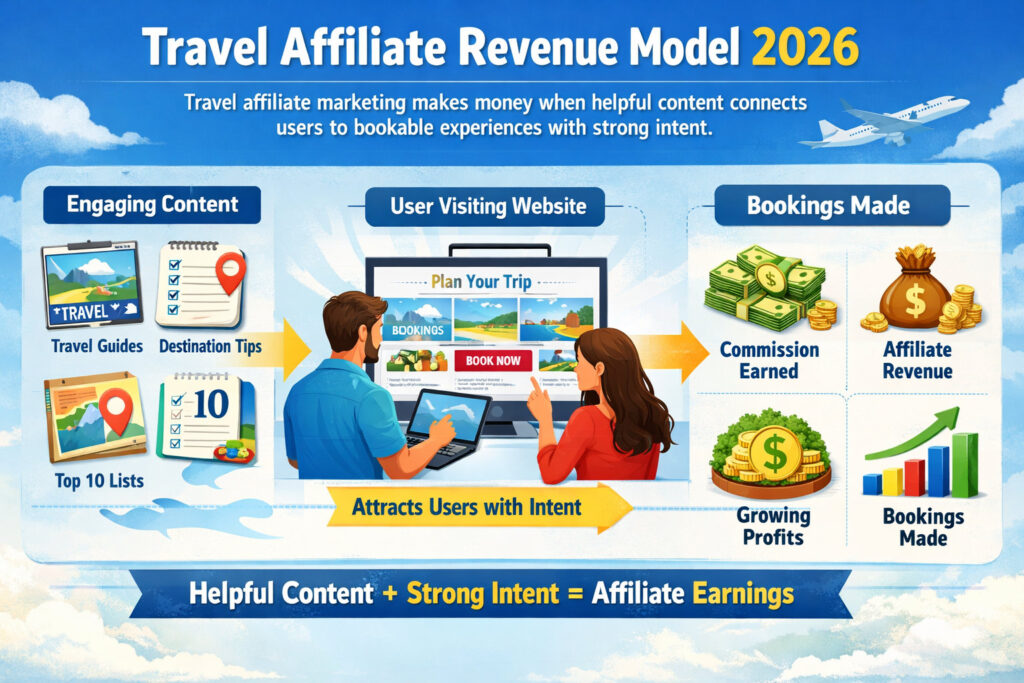
If you want to build a tour affiliate website on WordPress, the best approach is not to start with random blog posts and add monetization later. The best approach is to build the site as a system from the beginning: a focused niche, a clear content structure, strong internal links, and an affiliate setup that fits the way travelers actually search and book.
That matters more than most beginners realize.
A tour affiliate website does not become valuable just because it has traffic. It becomes valuable when it helps users choose experiences and gives them a natural path to book. That is why the strongest WordPress tour affiliate sites are usually built around booking-intent content and a monetization layer that already makes sense on day one.
Why WordPress is still the best foundation for a tour affiliate website
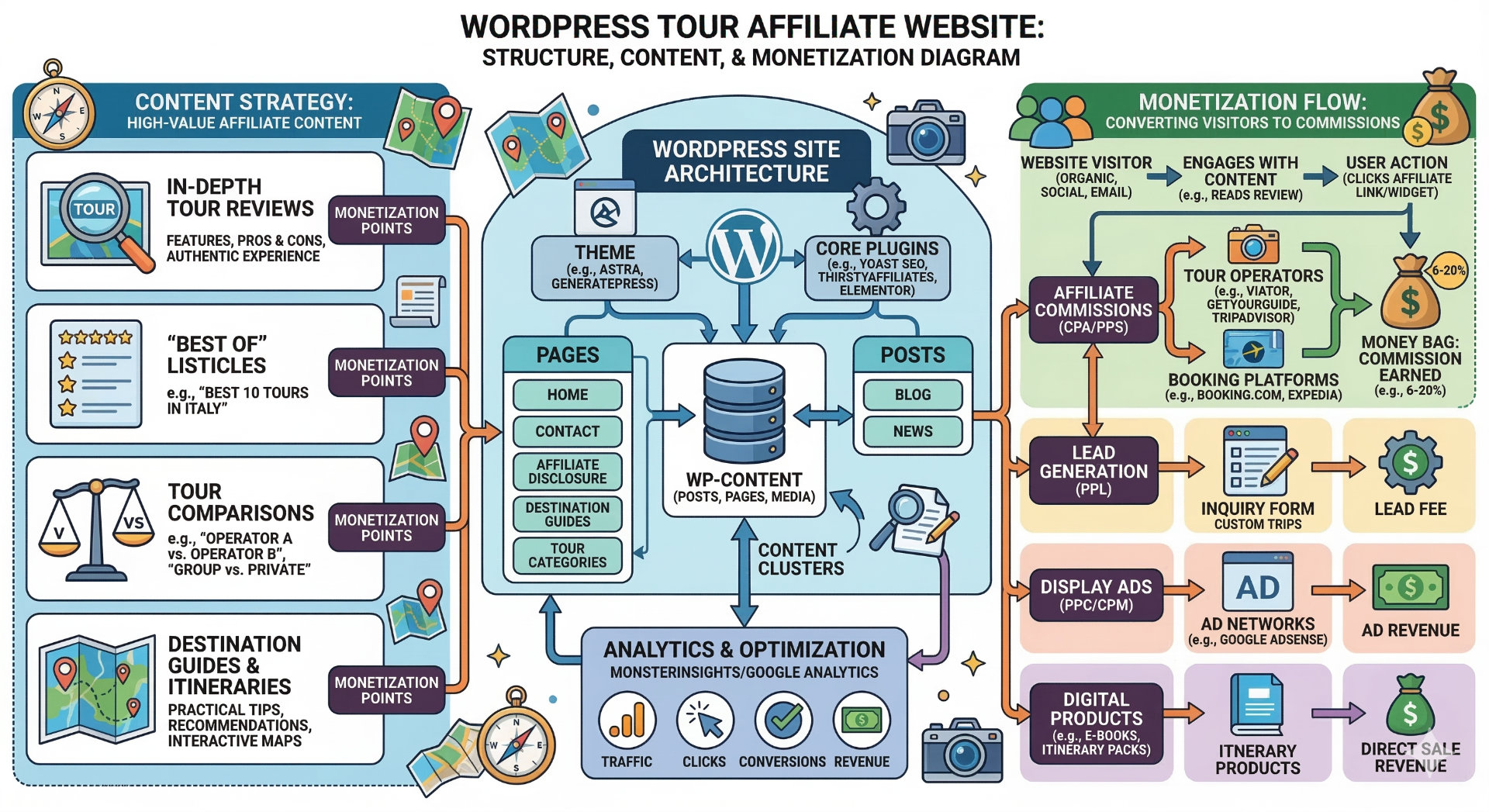
WordPress is still one of the most practical foundations for this kind of project because it gives publishers control over content, site structure, plugins, templates, and long-term flexibility.
That matters in affiliate marketing because your website is not just a blog. It is a content-and-monetization system. WordPress plugins are specifically designed to extend WordPress core functionality, and WordPress documentation makes plugin management a standard part of how site owners customize their sites.
For a deeper setup path, this article connects naturally to How to Start a Travel Affiliate Blog That Generates Passive Income and How to Build a Travel Affiliate Website with WordPress Plugins.
The biggest mistake people make when building a tour affiliate site
The most common mistake is building content first and monetization second.
That usually leads to a messy site structure:
- generic destination posts with weak commercial intent
- scattered affiliate links added by hand
- inconsistent CTAs
- no clear content path from discovery to booking
- extra manual work every time a new article is published
The result is a site that may look active, but does not operate smoothly as an affiliate business.
That is exactly why the build process matters so much. The best WordPress tour affiliate sites are designed so content and monetization support each other from the very beginning.
Step 1: Choose a niche that fits tours and experiences naturally
A tour affiliate website is much easier to build when the niche is narrow enough to create topical authority and commercial enough to support bookings.
Good examples include:
- family-friendly city tours
- food and cultural experiences
- Europe day trips
- first-time visitor tour guides
- skip-the-line attraction content
- local experience roundups by destination
The goal is not to cover every travel topic. The goal is to own a focused slice of the tours-and-experiences space where users already have decision intent.
That is where affiliate content usually becomes much more effective.
Step 2: Start with the right affiliate infrastructure, not manual patches
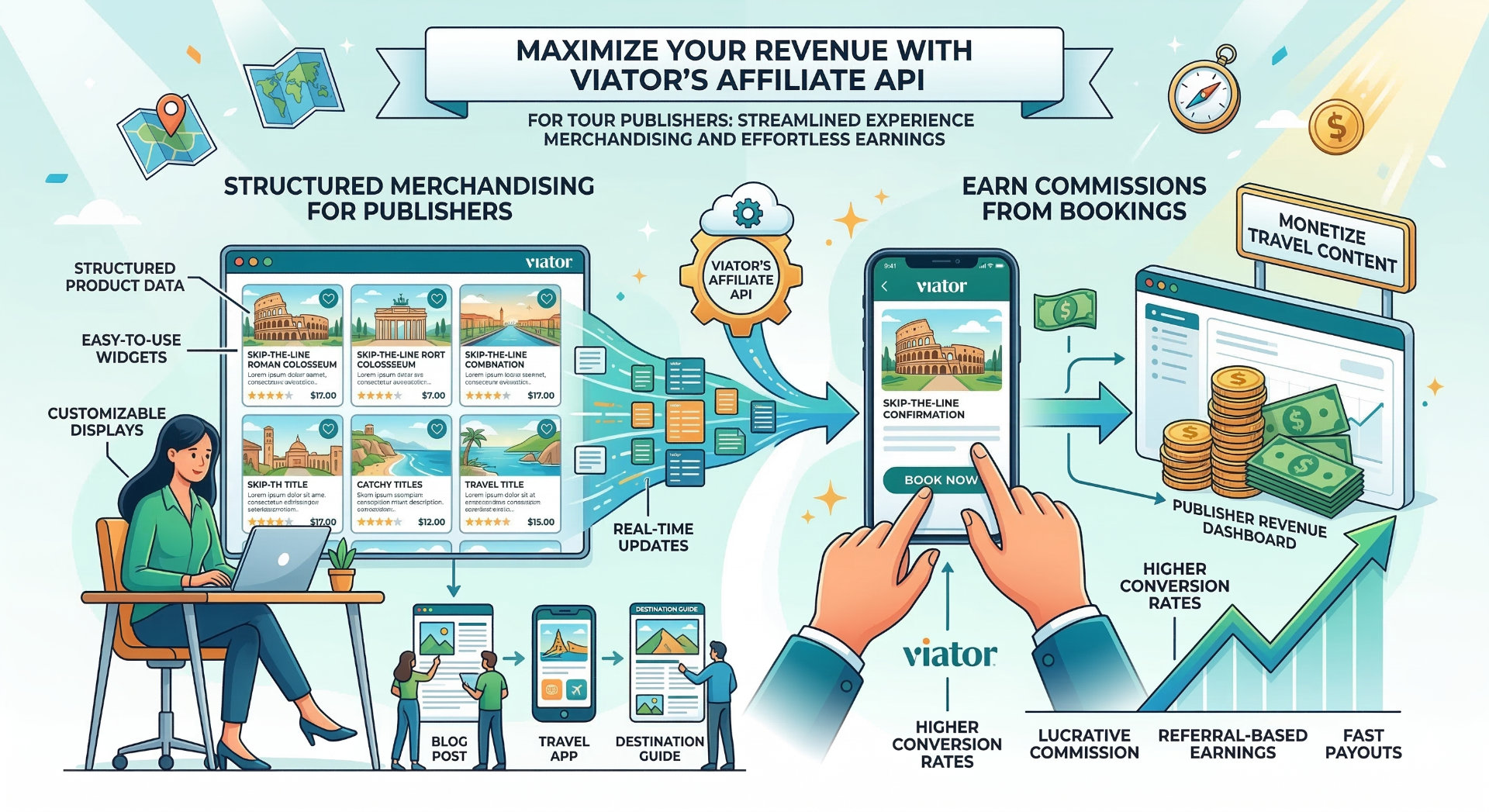
If the site is built around tours and activities, the best affiliate foundation is usually Viator’s Affiliate API.
Viator describes its Affiliate API as a content-only API that lets partners scale Viator’s product inventory across their site or platform, merchandise travel experiences, and earn commission on bookings. Viator also highlights free signup, immediate Basic Access for new affiliate accounts, and a referral model to viator.com with a 30-day cookie window.
That is important because it gives a tour affiliate website a cleaner monetization foundation than relying on scattered manual links.
Step 3: Use a WordPress implementation that is simple from day one
This is where many publishers overcomplicate things.
They understand that API-based monetization is better, but they assume it will be slow or technical to implement. On WordPress, that does not have to be true.
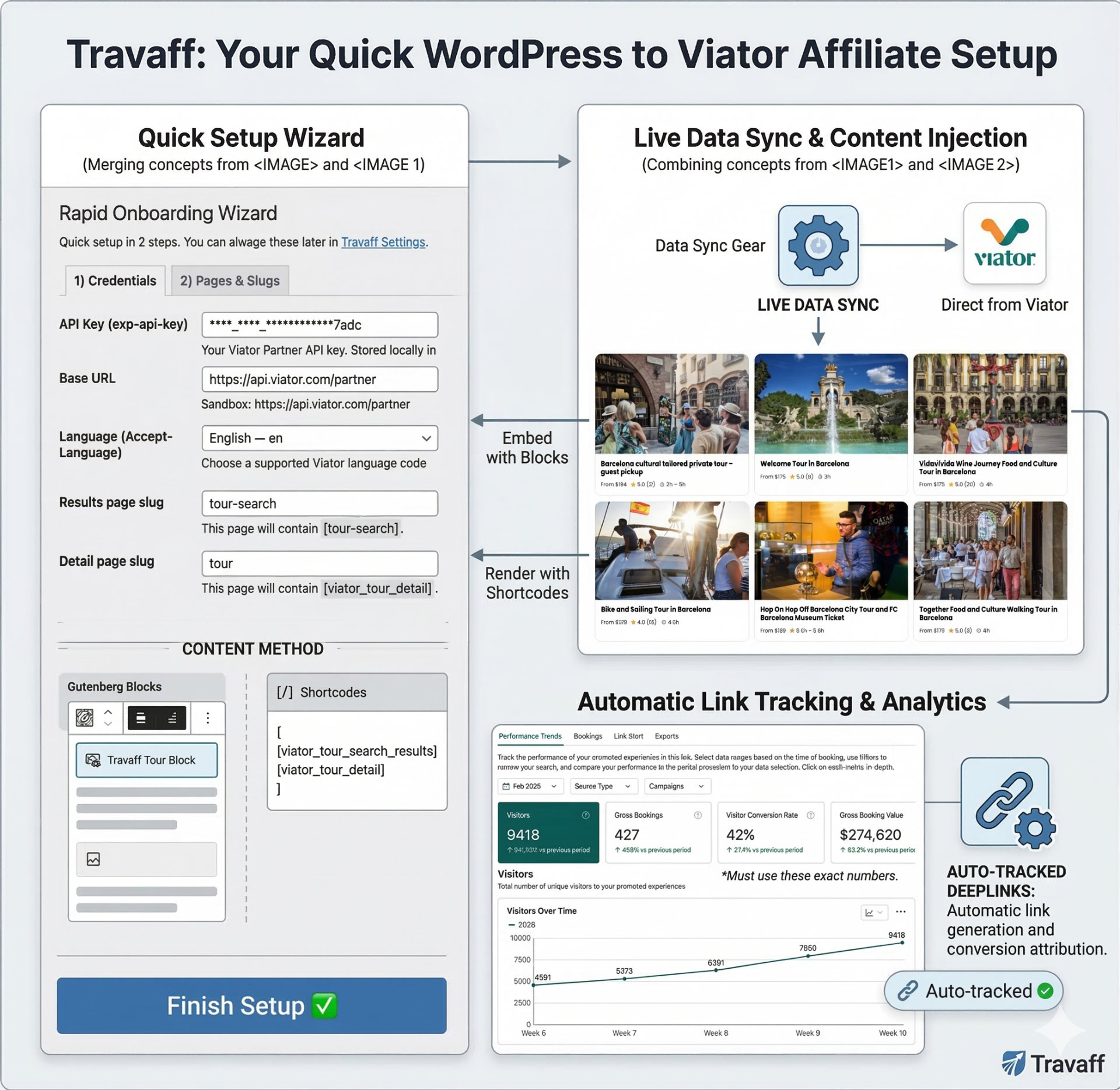
Travaff’s Viator Affiliate API WP Plugin is positioned specifically as a quick-launch solution for WordPress publishers. Travaff says the plugin supports zero-coding setup, uses your own affiliate credentials, auto-generates Viator deeplinks, syncs pricing, availability, and content in real time, and lets you display tour content through blocks or shortcodes. Travaff’s tutorial flow also breaks setup into a simple sequence: Install → Connect → Display.
That makes a big difference in practice. Instead of patching together manual link workflows, you can start with a cleaner system that already fits the structure of a WordPress site.
This section also links naturally to Travel Affiliate API vs Manual Affiliate Links: Which Is Better?, The Ultimate Guide to Automated Travel Affiliate Websites, and Best Travel Affiliate Tools for Publishers in 2026.
Step 4: Build your content around booking-intent pages
The best WordPress tour affiliate sites do not rely only on broad travel traffic. They build content around the moments where users are trying to choose something bookable.
That includes topics like:
- best tours in [destination]
- best day trips from [city]
- worth-it attraction tickets
- family-friendly experiences
- first-time visitor activity guides
- tour comparisons by budget, timing, or style
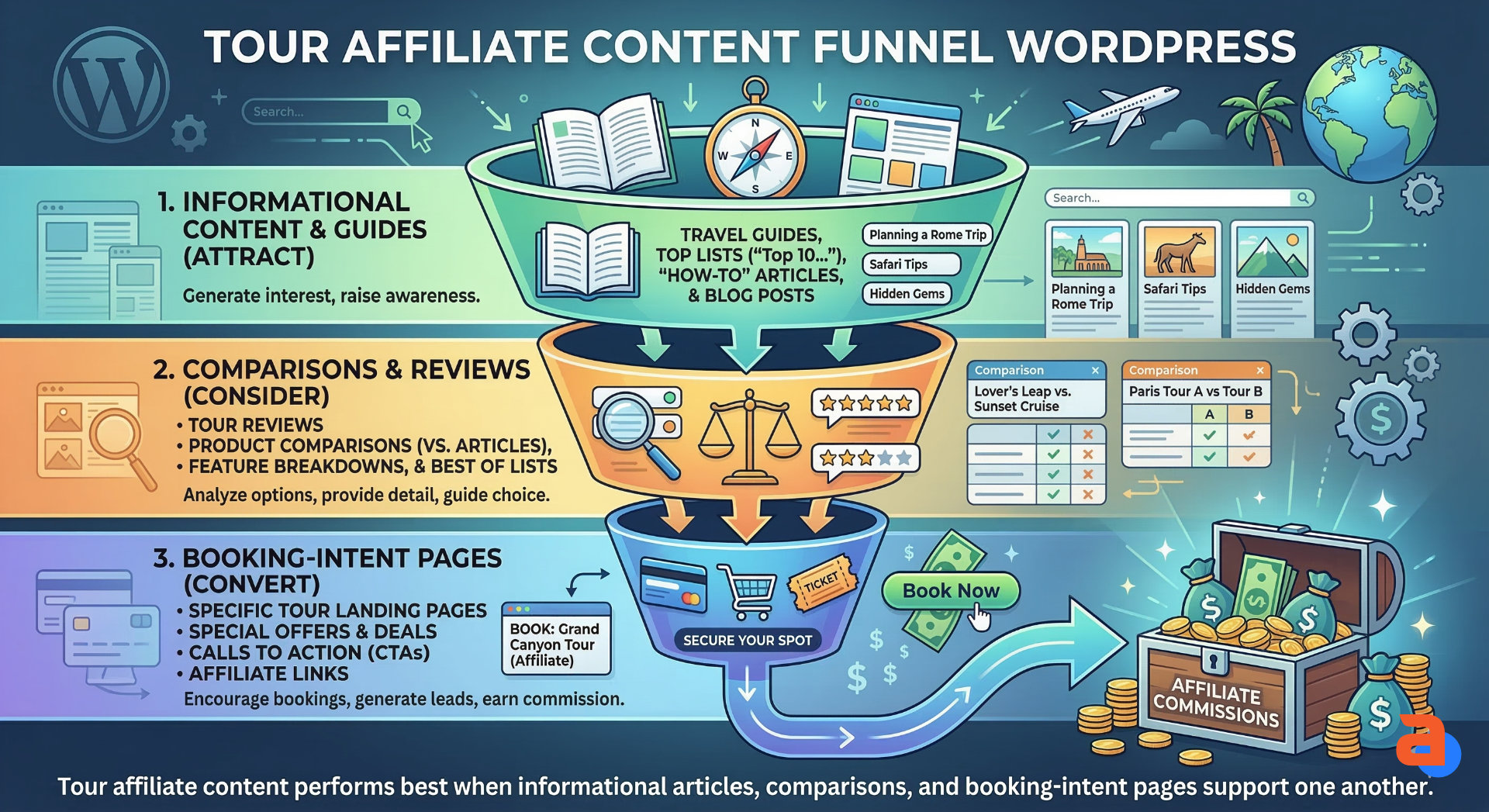
A strong content model usually has three layers:
Top-of-funnel content
Destination guides and trip-planning content that attract relevant readers.
Mid-funnel content
Comparison and recommendation pages that narrow choices.
Bottom-of-funnel content
Decision-ready pages that make the booking path obvious.
This is a good place to link to How to Make Money with Travel Affiliate Marketing in 2026, How to Increase Travel Affiliate Commission Without More Traffic, and How to Optimize a Travel Affiliate Funnel for More Revenue.
Step 5: Design recommendation blocks that feel native to the article
One reason many affiliate sites underperform is that their monetization looks pasted in.
The better approach is to make affiliate recommendations feel like a natural next step in the reader journey.
That might include:
- a featured experience block after the main answer
- a “best for” breakdown
- a short comparison layout
- a tour card section near the point of decision
- a CTA placed after a clear recommendation
This is where a WordPress implementation matters. WordPress already supports extensibility through plugins, and a plugin-based layout makes it much easier to keep recommendation structures consistent across multiple pages.
Step 6: Build internal links before the site gets messy
A good tour affiliate website is not just a set of individual posts. It is a guided path.
The internal link system should move readers like this:
- broad destination guide
- best tours page
- comparison page
- decision-ready booking article or tour results page
That makes the site easier for both users and search engines to understand. It also improves monetization flow because readers do not have to “guess” where to go next.
If you want to deepen this area later, this article should link to How to Maximize Revenue from Viator Affiliate Programs and Travaff.com Review: Is It a Smart Solution for Travel Affiliates?.
Step 7: Avoid the build choices that create future friction
These are the most common mistakes:
- choosing too broad a niche
- publishing traffic-first content with weak booking intent
- using manual affiliate links everywhere
- ignoring internal structure early
- treating monetization like an add-on instead of part of the build
The cost of those choices usually shows up later, when the site starts growing and everything becomes harder to manage.
That is why using a structured affiliate foundation with Viator’s Affiliate API and a WordPress-ready implementation like Travaff’s plugin is often the cleaner path from the start.
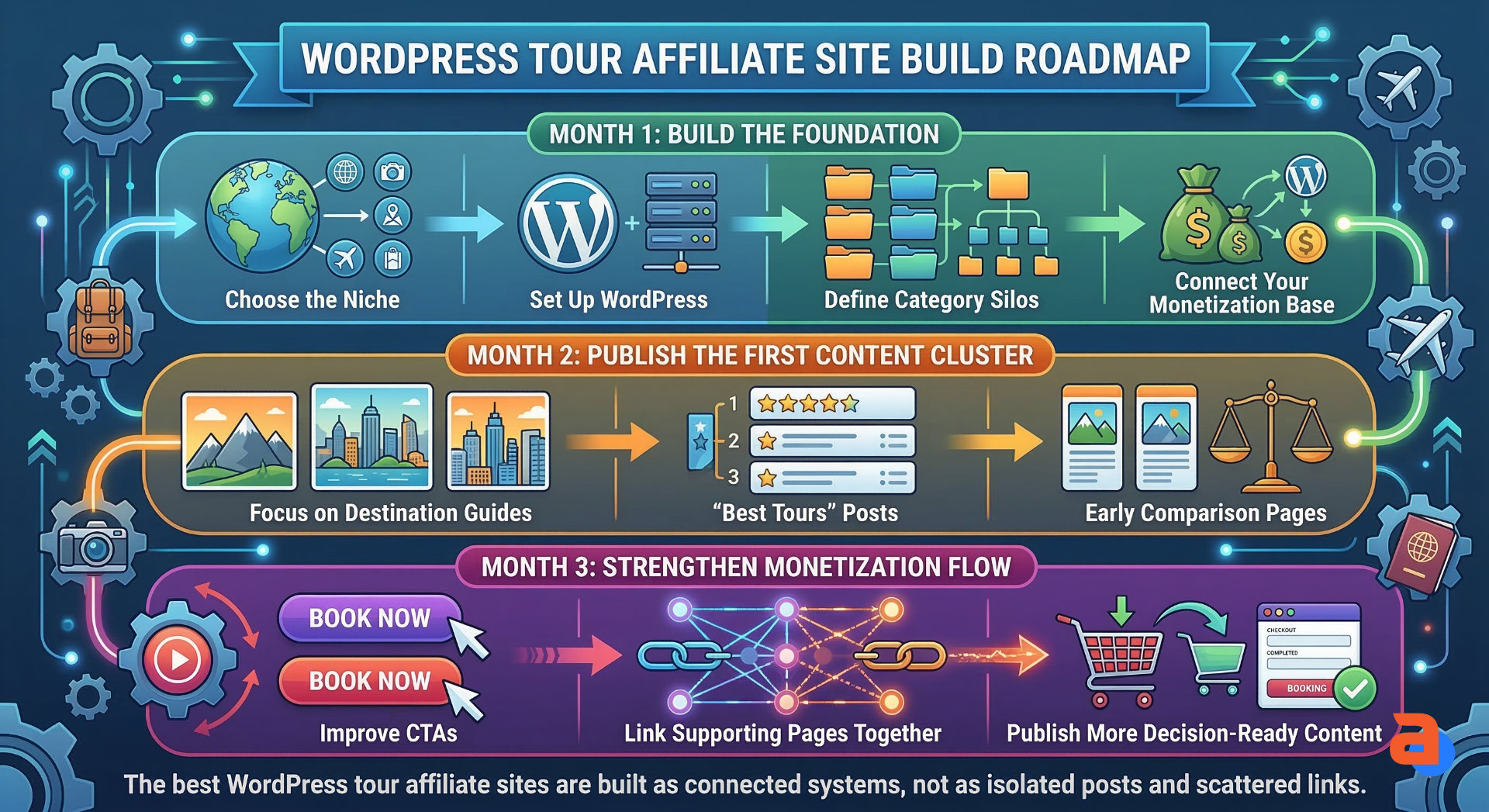
A simple 90-day build plan for a WordPress tour affiliate site
A practical first 90 days usually looks like this:
Month 1: Build the foundation
Choose the niche, set up WordPress, define category silos, and connect your monetization base.
Month 2: Publish the first content cluster
Focus on destination guides, “best tours” posts, and early comparison pages.
Month 3: Strengthen monetization flow
Improve CTAs, link supporting pages together, and publish more decision-ready content.
That kind of roadmap works because it treats the website like a system from the beginning.
Final thoughts
The best way to build a tour affiliate website on WordPress is not to start with content alone. It is to build content, site structure, and monetization together.
Choose a niche with booking intent.
Use WordPress because it gives you flexible structure.
Use Viator’s Affiliate API because it gives tours-and-experiences publishers a strong affiliate foundation.
Use Travaff’s Viator Affiliate API WP Plugin because it makes the WordPress implementation much easier from day one.
That combination is usually the cleanest path to building a site that is easier to manage, easier to monetize, and easier to grow.
Build a WordPress tour affiliate site that is ready to earn
The best setup is simple: choose a focused niche, publish booking-intent content, use Viator’s Affiliate API as your monetization core, and let Travaff handle the WordPress implementation layer from the beginning.