If you want to build a travel affiliate website with WordPress plugins, the first thing to understand is that plugins are not the strategy. They are the implementation layer.
The strategy comes first: what niche you are targeting, what kind of travel content you plan to publish, how your monetization fits the reader journey, and which affiliate model actually matches the site you want to build. Once that is clear, WordPress plugins become much more useful because they help turn the strategy into a repeatable system.
That is why strong travel affiliate sites rarely depend on one plugin alone. They usually work because the site has a clean structure, a clear content model, a reasonable plugin stack, and a monetization setup that feels natural rather than bolted on.
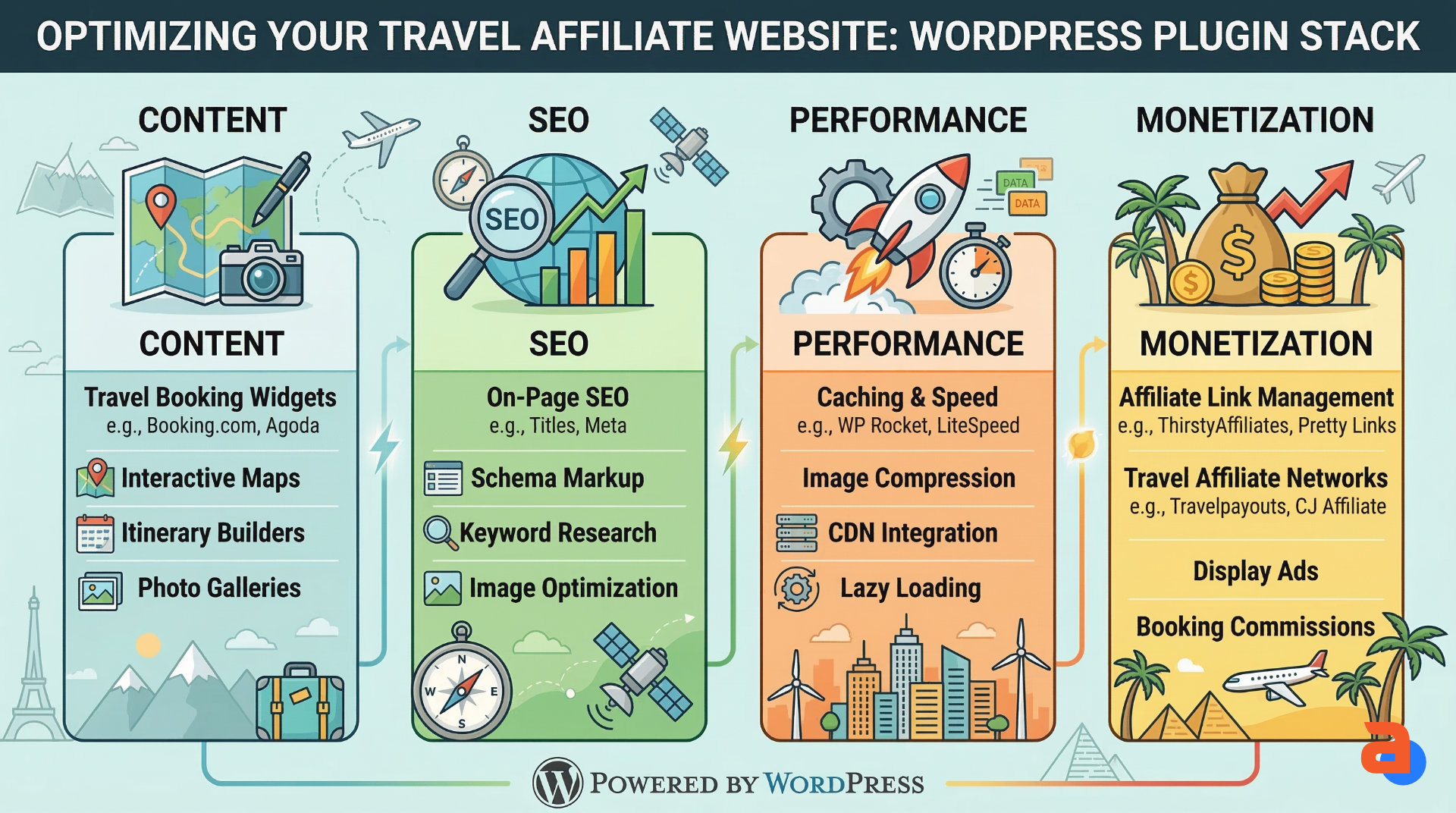
Why WordPress is still a strong foundation for travel affiliate sites
WordPress remains one of the most practical platforms for affiliate publishing because it gives site owners control over structure, content workflows, URLs, media, plugins, and long-term flexibility. WordPress documentation explicitly describes WordPress plugins as the way users extend functionality beyond the core platform, which is exactly why WordPress works so well for content-heavy affiliate sites.
For travel publishers, that flexibility matters because the website often needs to support several jobs at once:
- publish destination and planning content
- manage internal links and category structures
- display affiliate recommendations cleanly
- support comparison-style or booking-intent layouts
- stay fast enough to deliver a good user experience
If you are still setting up the broader strategy, this article pairs naturally with How to Start a Travel Affiliate Blog That Generates Passive Income and The Best Way to Build a Tour Affiliate Website on WordPress.
Start with the affiliate model, not the plugin
A common mistake is choosing tools before choosing the business model.
For a travel affiliate site, the more practical sequence is this:
- choose the niche
- decide what kinds of bookings or actions you want to influence
- choose the affiliate model that fits that niche
- then choose the WordPress tools that support that model
That matters because there is no single affiliate route that fits every travel site.
Some publishers prefer direct OTA or tours partner programs.
Some prefer broad travel affiliate ecosystems with access to multiple brands.
Some mix direct partnerships with broader platforms.
Some start with manual links and later move toward more structured workflows.
In other words, the plugin stack should support the affiliate model, not define it.
The main affiliate routes worth considering
For a travel affiliate website, the most common routes usually include:
- direct OTA or tours partner programs
- affiliate link workflows
- API-based affiliate implementations
- multi-brand travel affiliate platforms
- hybrid workflows that combine direct and network-style partnerships
This is where market context matters.
If your site is focused on tours and experiences, direct routes like Viator’s Affiliate API, GetYourGuide’s partner program, and Klook’s affiliate program are all relevant reference points. If your site is broader and covers different booking categories, options like Trip.com Partners or Travelpayouts can also make sense.
Viator positions its Affiliate API as a content-only API for scaling tours-and-experiences inventory, while GetYourGuide, Klook, Trip.com, and Travelpayouts each present their own partner or affiliate routes for publishers and travel marketers.
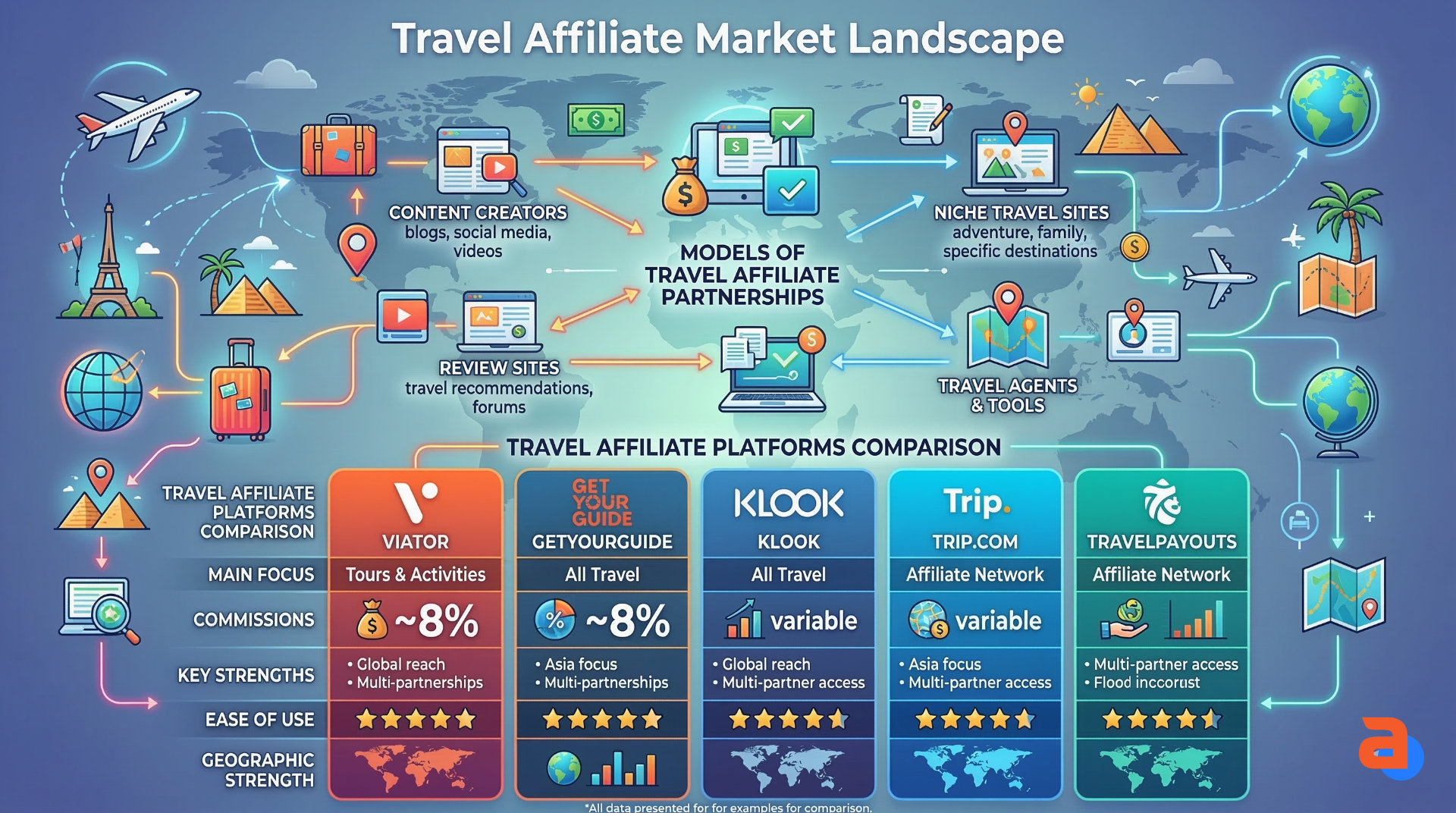
Competitor and substitute workflows worth understanding
Before looking at any single implementation route, it helps to understand the broader WordPress landscape.
Some publishers evaluate theme-dependent options such as Traveler’s Viator add-on, which is explicitly sold as an affiliate travel website add-on but requires the Traveler WordPress theme. Others look at broader portal-style or white-label directions such as Adivaha’s Viator WordPress plugin, which emphasizes real-time inventory, pricing, availability, and on-site booking-style experiences. In a different category again, plugins like WP Travel Engine and Tourfic are much closer to booking-system or tour-operator workflows than to affiliate-first publishing, even though they may appear in similar WordPress searches.
That is an important distinction. Not every “WordPress travel plugin” solves the same problem. Some are built for affiliates. Some are built for direct booking. Some are built for theme ecosystems. Some are closer to custom portal infrastructure.
When WordPress plugins become especially valuable
Plugins become most valuable when your site starts needing repeatable workflows.
That usually happens when you publish:
- destination guides
- “best tours” posts
- city activity roundups
- comparison pages
- booking-intent recommendation articles
- reusable content blocks across multiple pages
At that stage, WordPress plugins help in four main ways:
- they reduce repetitive manual work
- they keep layouts more consistent
- they make SEO and internal linking easier to manage
- they support a cleaner monetization experience
That does not mean every site needs a complex plugin stack. It means plugins are most useful when they solve recurring problems, not when they are installed just because they exist.
This section also connects naturally to Travel Affiliate API vs Manual Affiliate Links: Which Is Better? and The Ultimate Guide to Automated Travel Affiliate Websites.
Why Viator is often a strong fit for tours-and-experiences sites
For sites built mainly around tours and activities, Viator is often one of the more practical ecosystems to evaluate.
That is because its affiliate model aligns closely with the kind of content those sites usually publish: destination guides, activity roundups, “best tours” pages, and other content that sits close to booking intent. Viator says its Affiliate API lets partners scale product inventory across their sites while earning commission on bookings, and it highlights access to structured product content such as descriptions, images, and other merchandising data. Viator also notes free signup and immediate Basic Access for new affiliate accounts.
At the same time, it is still only one route among several. A site that covers broader travel categories may decide that a different platform or a mixed setup makes more sense. The point is not to force every project into the same toolset. The point is to choose the model that matches the content and the workflow.
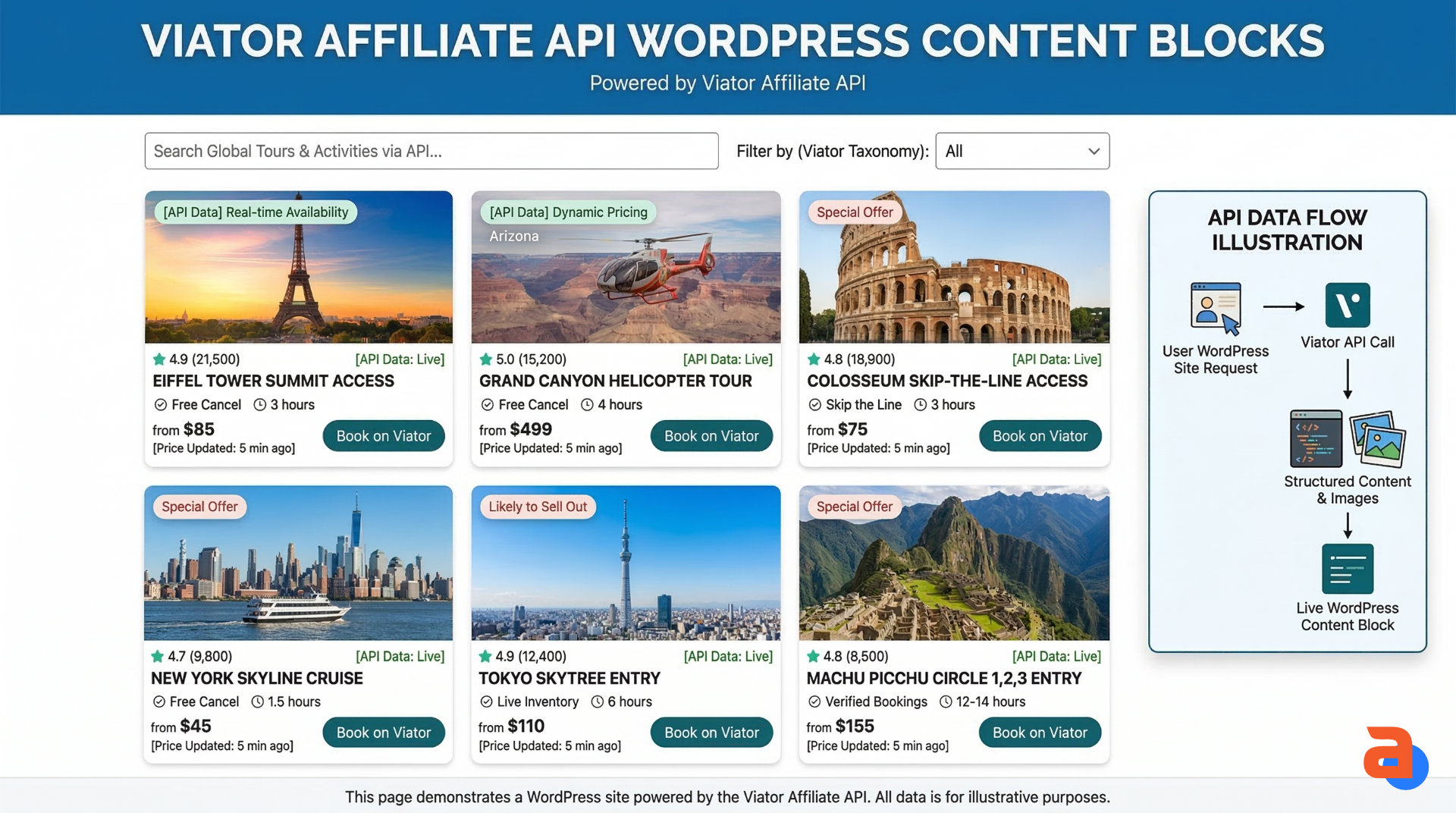
Where Travaff fits in this stack
This is where the WordPress-specific implementation question becomes more practical.
If a publisher has already decided to build around Viator, then the next question is not “Should I use Travaff by default?” The better question is: what is the cleanest WordPress implementation path for that specific workflow?
One option worth considering is Travaff’s Viator Affiliate API WP Plugin. In that narrower context, Travaff fits as a WordPress implementation layer rather than as a universal answer for all travel affiliate sites. Travaff’s public product page and tutorials position the plugin as a quick-launch WordPress setup with blocks or shortcodes, auto-generated deeplinks, live sync, and a simple install flow for publishers using their own Viator affiliate credentials.
That distinction matters.
Not every site needs it. Not every site is even building around Viator. But for WordPress publishers who are already committed to that affiliate model and want a more structured implementation workflow, Travaff is a relevant option to evaluate.
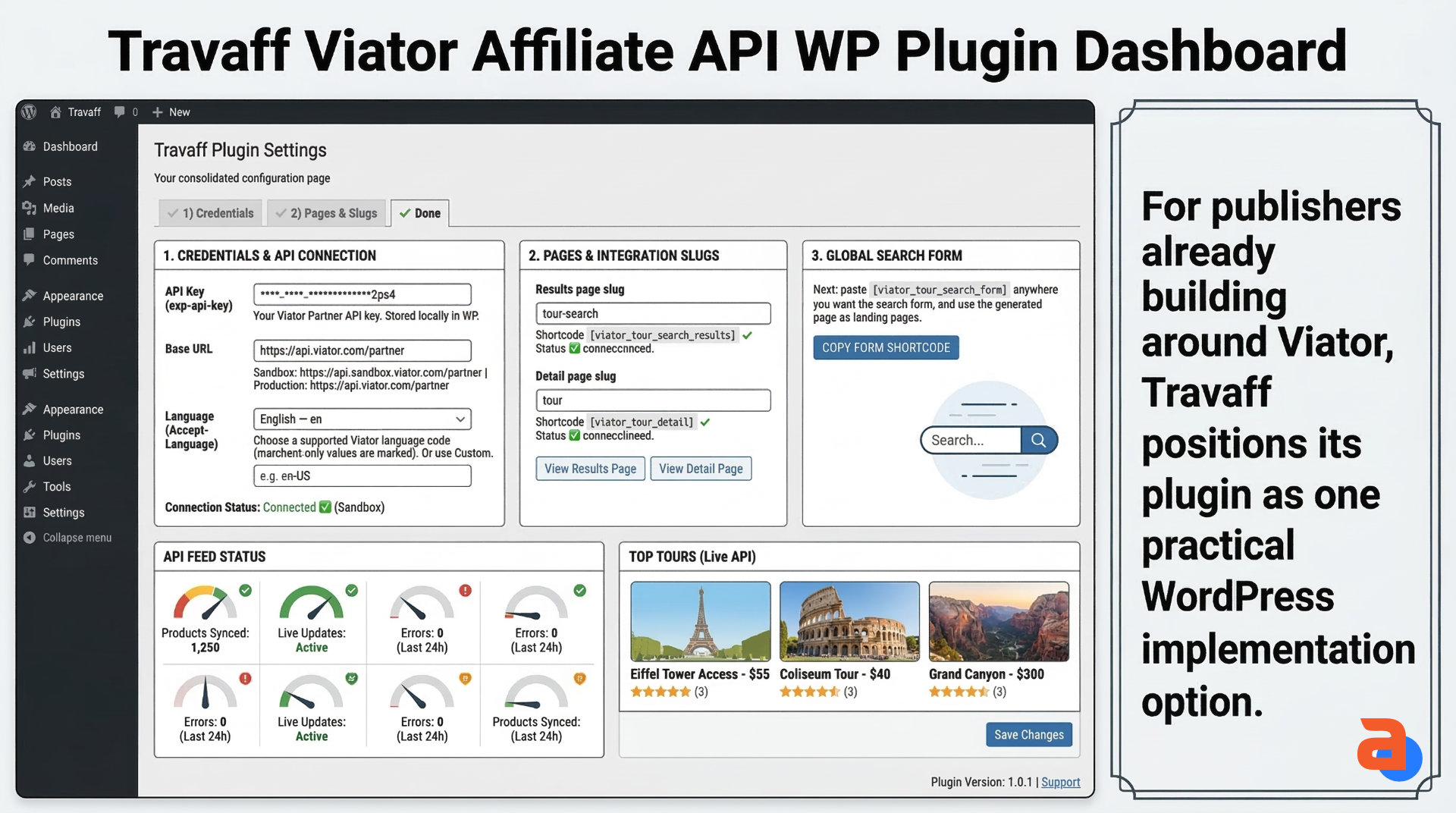
This section pairs naturally with Travaff.com Review: Is It a Smart Solution for Travel Affiliates? and How to Maximize Revenue from Viator Affiliate Programs.
The plugin categories a travel affiliate site actually needs
Most travel affiliate websites do not need dozens of plugins. They usually need a few categories covered well.
1. SEO and metadata control
You need clean control over titles, descriptions, indexing behavior, and structured on-page publishing.
2. Performance and media optimization
Travel sites often use a lot of images, so speed and media handling matter more than people expect.
3. Layout and reusable content blocks
“Best tours,” comparison sections, and recommendation layouts are easier to publish when your content blocks are repeatable.
4. Affiliate implementation
This is where your monetization workflow lives. For some sites, simple links may be enough. For others, especially if the site is tightly built around one affiliate model, a plugin-based implementation becomes more useful.
5. Utility plugins
Redirects, forms, tables, analytics helpers, and supporting workflow plugins all matter more than most beginners think.
The smartest stack is usually the one that is lean, stable, and aligned with the site’s actual publishing model.
How to avoid plugin chaos
This is where many WordPress affiliate sites get weaker over time.
They do not fail because WordPress is a bad platform. They fail because the plugin stack becomes too heavy, too redundant, or too inconsistent.
A few rules help a lot:
- install by function, not by hype
- avoid multiple plugins doing the same job
- remove plugins you no longer need
- keep the stack light enough that the site stays usable
- choose tools that support your real workflow, not your imaginary future workflow
That last point matters. A plugin stack should solve today’s publishing problems while still giving the site room to grow.
The best content structure for a plugin-driven travel affiliate site
No plugin stack can rescue a weak content system.
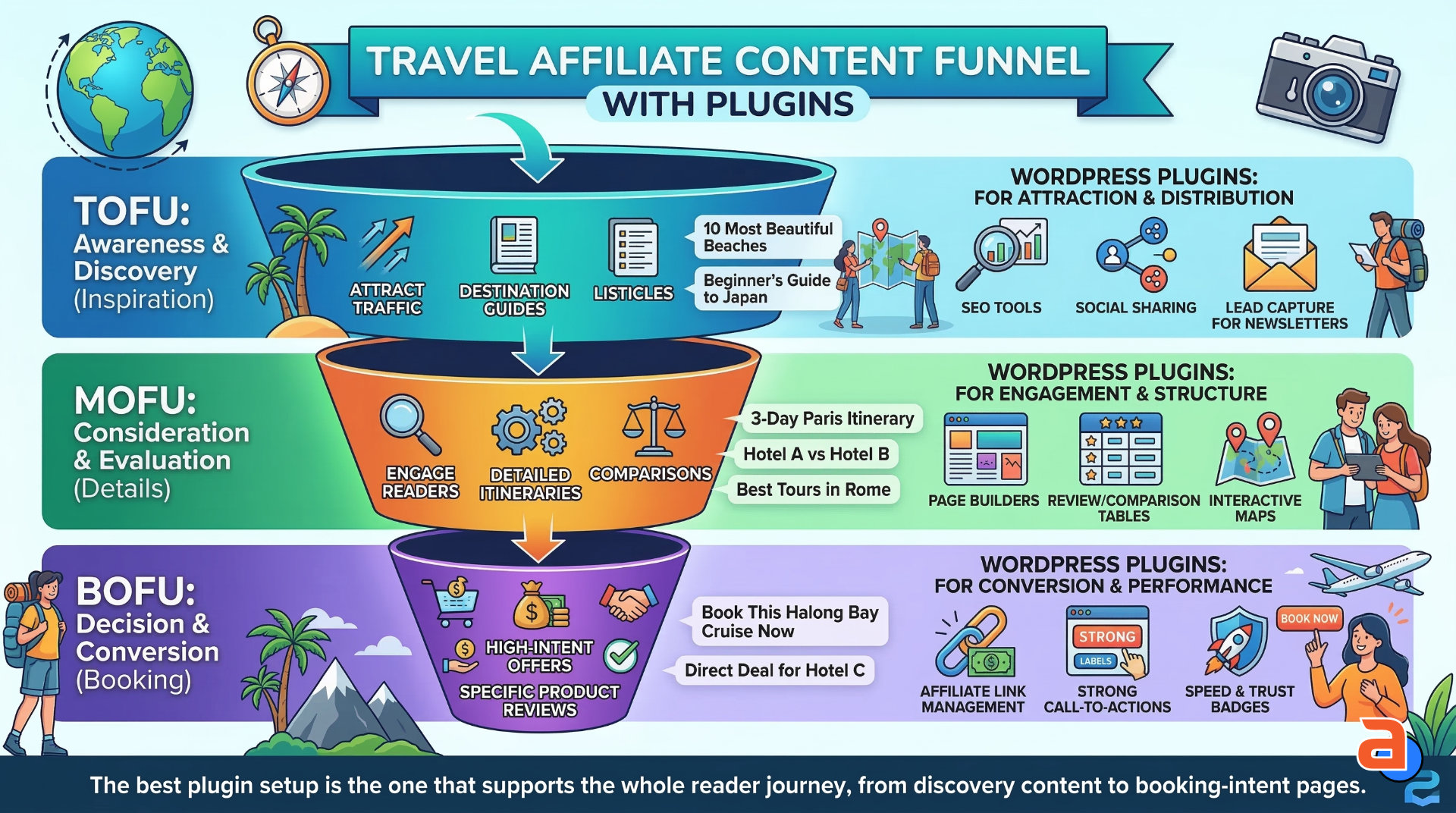
The sites that tend to perform best still build around a simple funnel:
Top-of-funnel content
Destination and planning articles that attract the right audience.
Mid-funnel content
Comparison, “best of,” and narrowing pages that help users evaluate options.
Bottom-of-funnel content
Decision-ready pages that make the next click obvious.
Plugins support that system. They do not replace it. Google’s guidance for AI features and helpful content still points back to the same fundamentals: useful, people-first content, crawlable pages, and clear site structure.
This is a good place to link to How to Increase Travel Affiliate Commission Without More Traffic and How to Optimize a Travel Affiliate Funnel for More Revenue.
A practical rule for choosing the right plugin path
A simple rule works well here:
- if the site is still a light experiment, keep the stack minimal
- if the site is content-heavy and niche-focused, build a repeatable plugin stack early
- if the site is centered on Viator and WordPress, then a tool like Travaff may be worth considering
- if the site spans multiple travel categories, a broader affiliate workflow may fit better
That is the balanced answer.
The goal is not to force every publisher into the same plugin stack. The goal is to choose the setup that reduces friction, supports the content model, and fits the site’s actual niche.
Final thoughts
The best way to build a travel affiliate website with WordPress plugins is to think like a publisher first and a tool buyer second.
Start with the content model.
Choose the affiliate route that fits the niche.
Use plugins to make the workflow cleaner, not heavier.
And only bring in specialized tools when they clearly match the site you are building.
For some sites, that may mean a broader affiliate platform. For others, especially tours-and-experiences sites already built around Viator, it may mean evaluating a WordPress implementation option such as Travaff. The right answer depends on the business model, not just the brand name.
FAQ
Do I need a lot of plugins to build a travel affiliate website?
No. You need a well-chosen stack. Too many plugins can create bloat, conflicts, and maintenance issues.
Should I choose the plugin before the affiliate platform?
Usually no. It is better to choose the affiliate model first, then build the WordPress stack around that workflow.
Is Viator the only option for travel affiliate sites?
No. It is often a strong fit for tours-and-experiences sites, but other relevant options include GetYourGuide, Klook, Trip.com, Travelpayouts, and mixed workflows depending on the niche.
Where does Travaff fit best?
Travaff fits best for WordPress publishers who are already building around Viator and want a cleaner implementation path for that specific affiliate workflow.